Learn Boutis: Materials & Supplies
If you would like to follow along with the tutorial, below is a list of the materials you will need, along with a description of their characteristics.
Materials Required:
When investing time and effort into a project, choosing the right tools and materials will help you achieve a successful result. A description of the materials specific for boutis follows.
Specific for Boutis
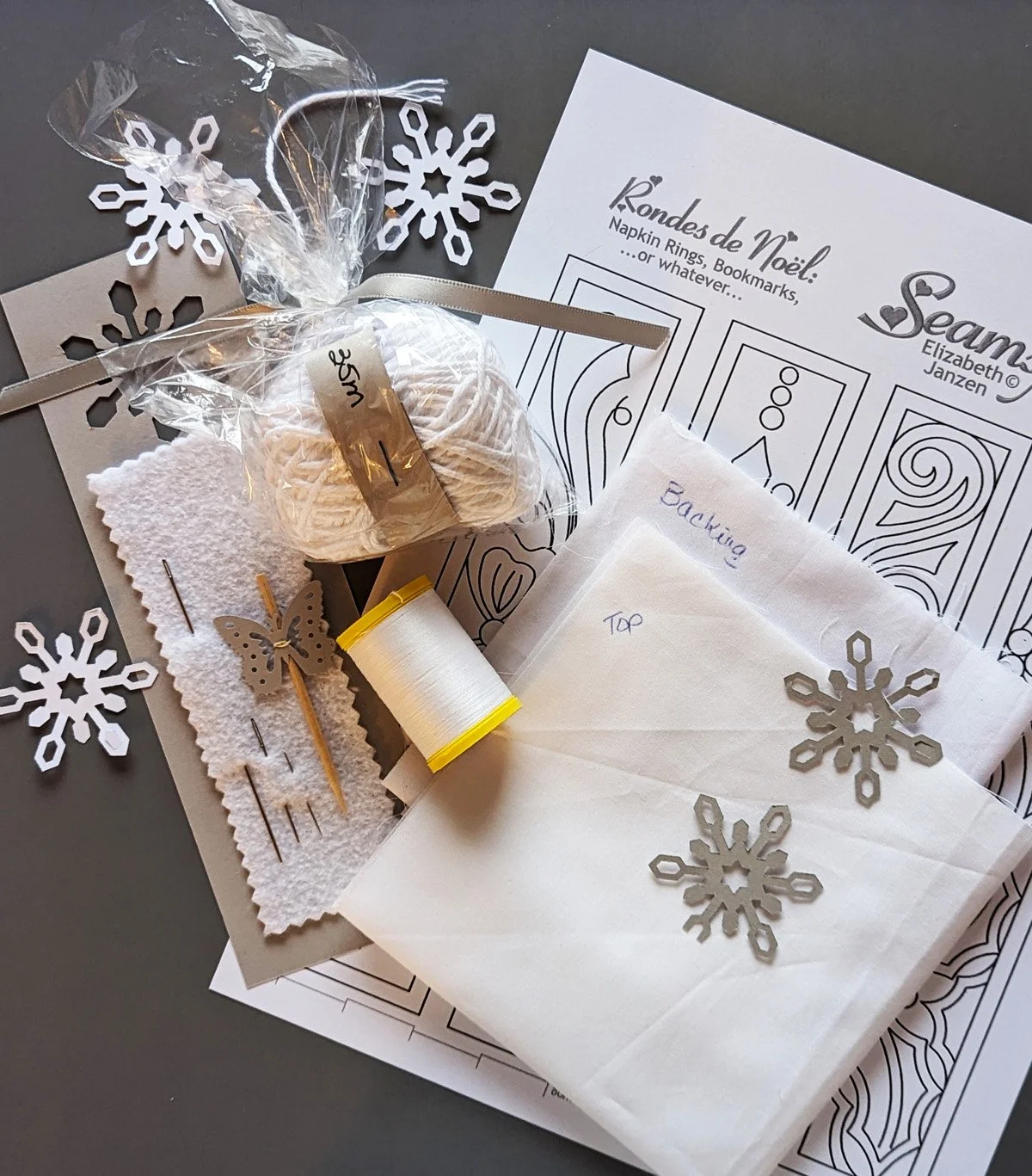
What you will need:
- 2 pieces of cotton batiste
- Quilting weight cotton thread
- Cotton Cording yarn, lightly twisted
- 1 quilting between Size 10
- 1 cording needle- Size 22 or 24 round point tapestry
- Longer cording needle: specialty boutis needle
- Toothpicks
Details of Materials: How to choose your materials
- Cotton Batiste: Because the batiste undergoes a lot of manipulation during the cording stage, it should be of good quality. It should have a tight, strong weave, be slightly translucent and still easy to needle. If you can’t find a good quality cotton batiste, you can substitute with a light weight cotton poplin or shot cotton. Many good quality quilting cottons are too heavy. Traditionally, both sides (top and bottom) of the boutis have been made with white batiste. Contemporary “boutiseusses” will sometimes substitute the second piece of white batiste for a coloured cotton with the similar characteristics. Patterns are usually printed or traced onto white batiste.
- 100% cotton thread: Quilting weight or #4O
- Cotton cording yarn: The yarn of choice for boutis is “lebaufil”, a high quality specialty yarn created specifically for boutis. Other cotton yarns with the same qualities may be substituted, (#8 cotton, with 4 loosely twisted strands that can be easily separated.)
The reason we focus on 100% cotton in all of the materials is to ensure that the rate of shrinkage is equal.
- 3 different types of needles required for boutis:
- #10 Quilting Needle with a large eye
- #22 or #24 round point tapestry needle: For cording short channels and spaces
- A longer cording needle: For cording longer channels. Bohin has made a boutis specific needle.
The rest of the materials required are basic sewing essentials found in most needleworkers’ supply kits.
(See Below)
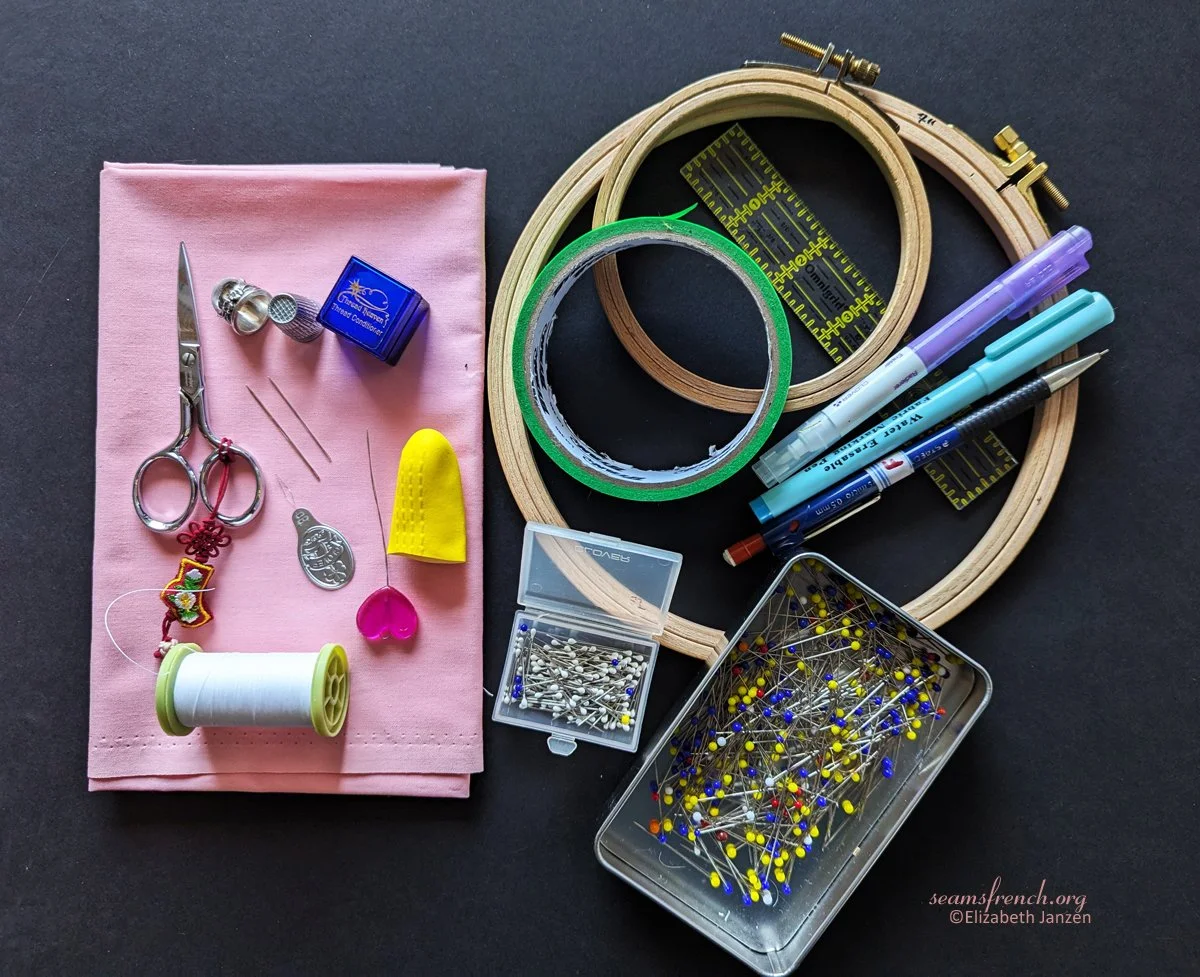
Basic sewing supplies: (right)
- Embroidery hoops: a small one (4 ½” - 5“) for the stitching and a larger hoop (7”-8”) for the cording
- Basting thread
- Basting Needle
- Sharp embroidery scissors
- Thimble
- Fabric marking pencil: A fine, HB lead pencil (like a mechanical pencil) or a fine wash out marker
- A ruler, preferably a transparent ruler with a clearly marked 1/8” line like an Omnigrid
- Needle threader (optional)
- Thread wax (optional)
- Rigid sheet of foam board or corkboard (minimum ¼” thickness) used for blocking the finished and washed boutis
- Sturdy pins
- Optional but useful: Needle threader, Thread Wax
Finishing
- Backing fabric and stuffing (optional)
- Ribbon for hanging
Additional Materials Required for Heart Project:
- Cotton Embroidery Floss
- Seed Beads (optional)
- Embroidery needle
If you are interested in working along on this project, the pattern will available for free download in the next post: “Preliminary: Basting, Tracing & Hooping”. Purchasing the kit is not required if you have access to your own materials and supplies.
If you are interested in working along on this project but are having difficulty finding the right materials, the kit is available in my Etsy store with all of the boutis essential materials, supplies and embellishments required for this project. (see right) Also included in the kit is a complete step-by-step instruction manual.
Available for separate purchase is a pdf only of the printed pattern as well as a complete step by step instruction manual.
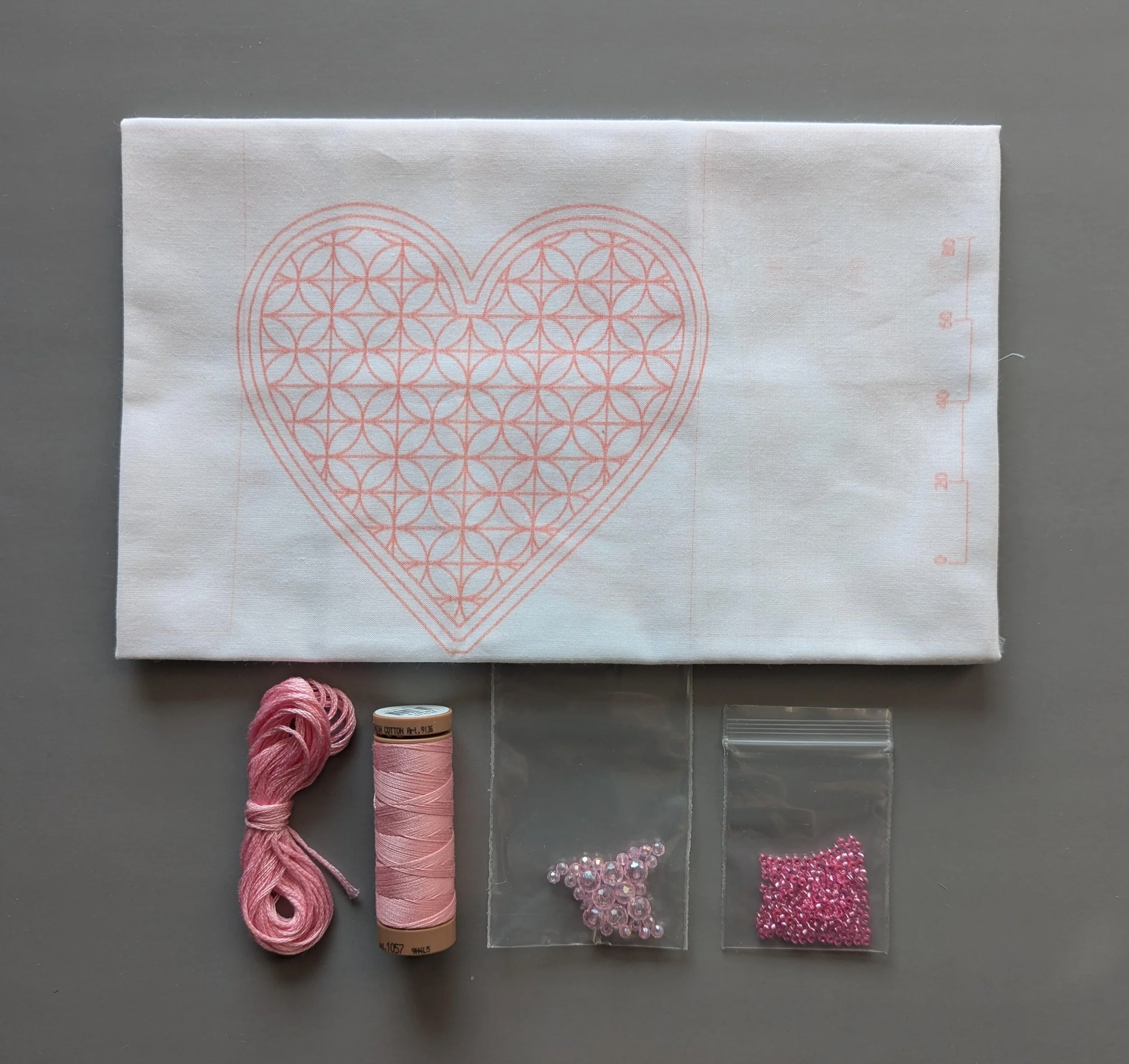
(Right) The materials included in the kit are specific for Boutis. Also included are: embroidery floss, ribbon & beads in 3 colour options. (Colour choices below).
Option 1: White
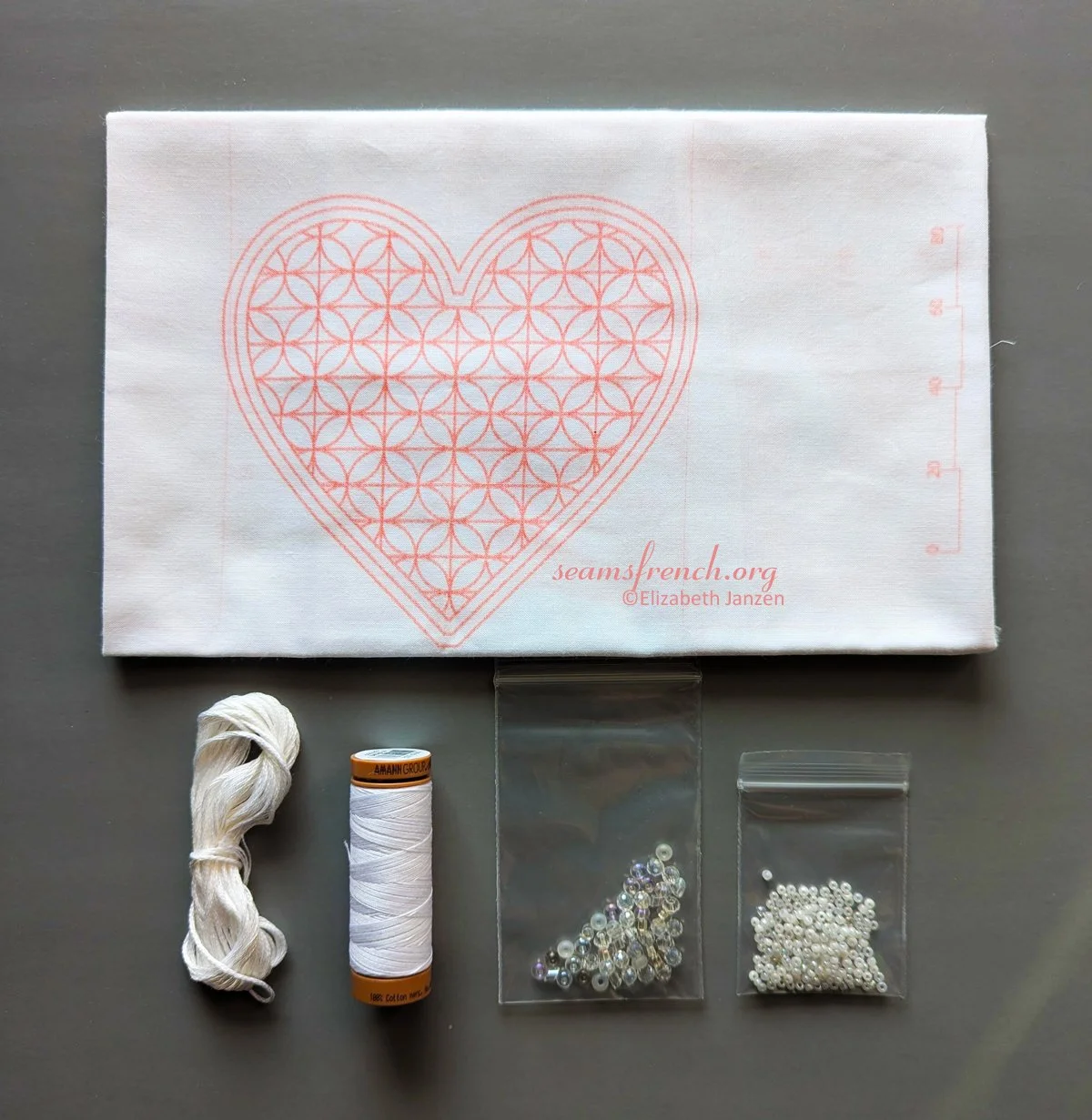
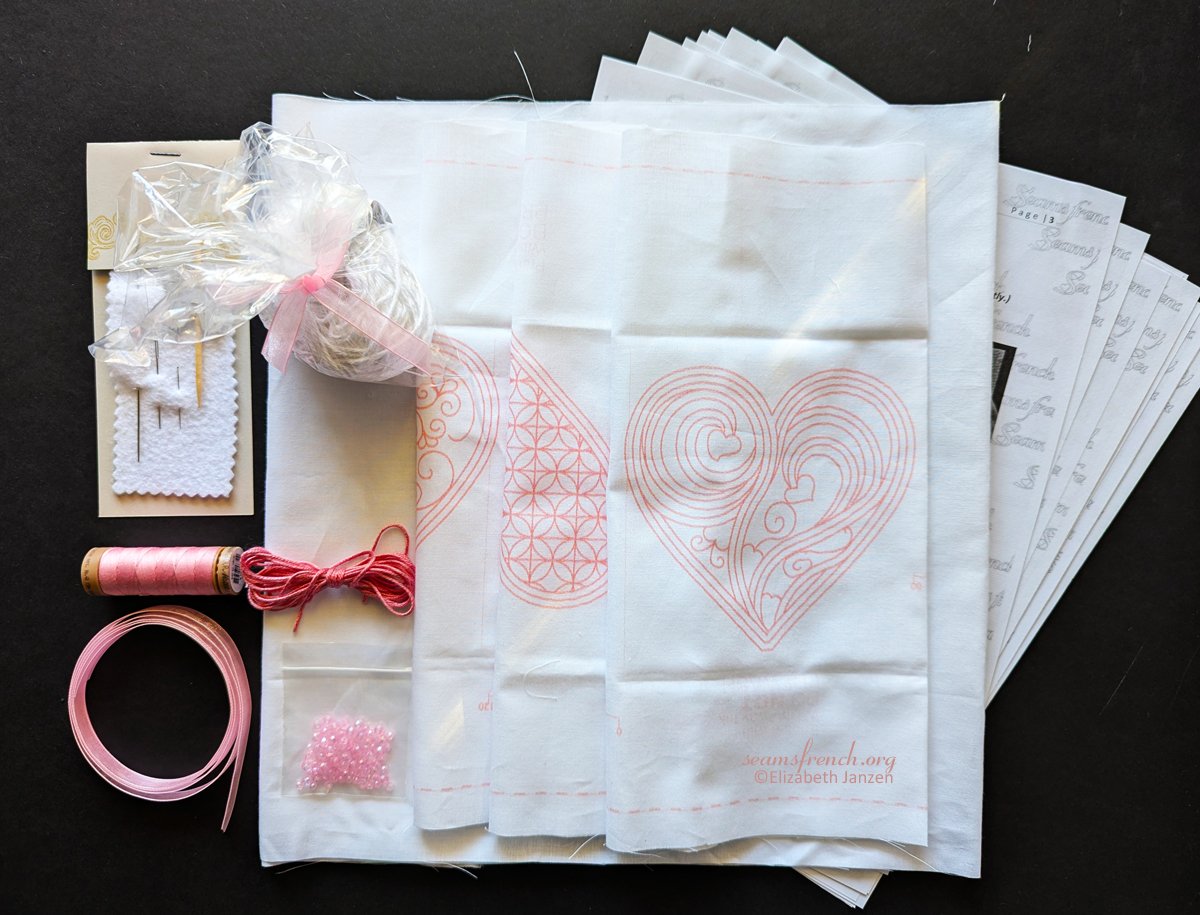
There are 3 colour options available. If you would like to order a kit, please indicate which of the 3 colour options you would prefer when placing your order. Please note, there is a limited supply of kits and colour choices.
Option 2: Red
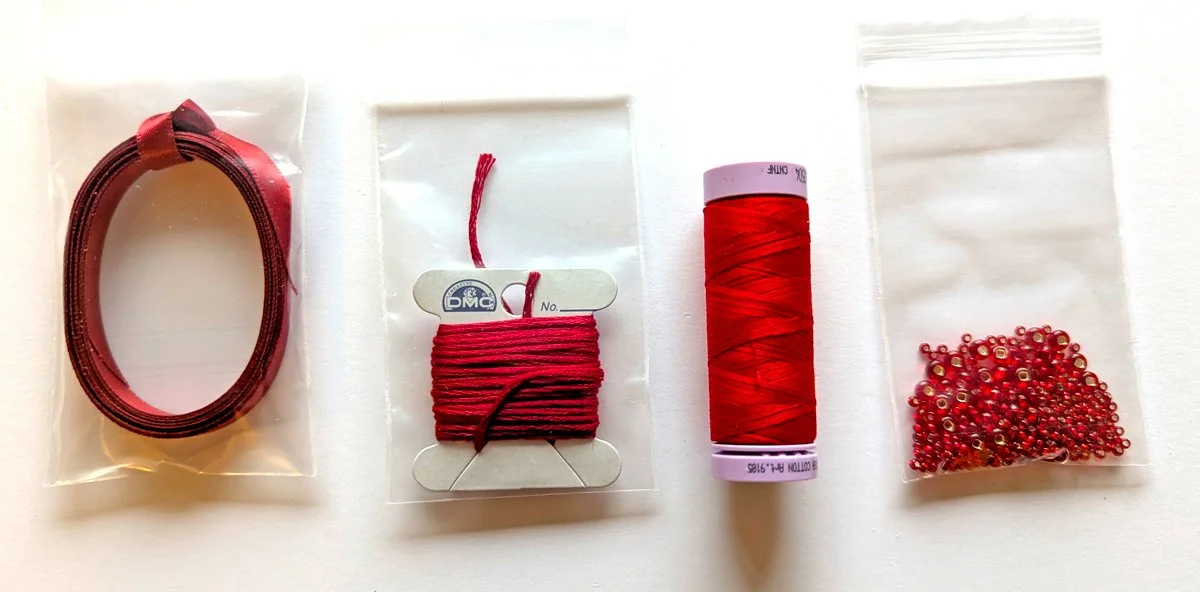
If your interest has been piqued and you are curious to learn more about this traditonal French technique, I invite you to check out “Step 1: Preparation”.
Option 3: Rose